

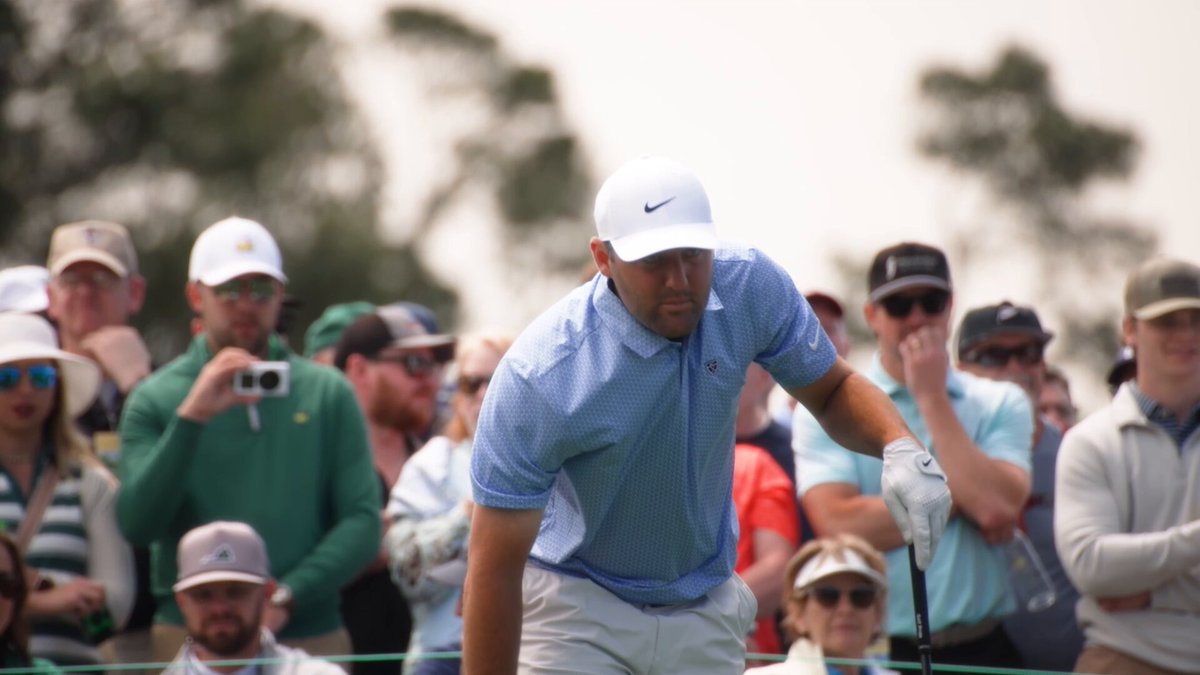
The 90th Masters Tournament arrives with narratives that rival the event's storied history. As the world's top players converge on Augusta National, three men represent the breadth of golf's human drama: the champion at his peak, the innovator seeking validation, and the warrior risen from adversity.
Scheffler: Balancing Excellence Without Arrogance
Scottie Scheffler arrives as the clear favorite and the story of a man at the top. Since launching his professional career four years ago, the world's number-one-ranked player has won more tournaments than any other competitor on the men's professional circuit, including two Masters titles. Yet Scheffler refuses to let his achievements define him entirely.
"It's always been a battle for me, trying to strike a balance between continuing to work hard, staying competitive, and also not having either my good golf or my bad golf define me, because that can go one of two ways," Scheffler explained. "If I let my bad golf define me, then I'd be a pretty miserable person, and if I let my good golf define me, whether or not it's a green jacket or an open championship, then I'd probably walk around fairly arrogant all the time, and I probably wouldn't be very nice to people because I think I'm hot stuff because I won a few golf tournaments."
This philosophical approach sets Scheffler apart as more than a statistical phenomenon. His dominance carries substance, tempered by self-awareness and perspective—qualities that matter as much in golf's record books as tournament victories.
DeChambeau: The Innovator's Quest
Then there is Bryson DeChambeau, the two-time major champion for whom continuous innovation remains second nature. The wheels are always turning for golf's mad scientist, perpetually seeking competitive edges through unconventional thinking.
"There's this nature that I have about myself where innovation is a habit of mine, and I really find and take pride in that ability to learn, even through failure, even through making a bad decision or a good decision, what I can get from that," DeChambeau said. His record at Augusta shows promise but lacks the championship breakthrough that would cement his legacy here. This year presents another opportunity to transform near-misses into concrete success.
Woodland: From Darkness to Redemption
Perhaps the most compelling storyline belongs to Gary Woodland, a man risen from the depths. Three years ago, a brain tumor diagnosis threatened to end his career entirely. The subsequent surgery and rehabilitation seemed to have closed the door on Augusta's most exclusive gathering. Yet Woodland refused surrender.
"When I was diagnosed with this brain tumor three years ago, my number one thought was I wasn't going to let this thing win," Woodland reflected. "Golf has given me something a lot more to fight for than just myself and my family. Winning was probably the last thing on my mind for a long time, and it was hard missing this place last year."
Two weeks before the Masters, Woodland claimed victory, securing his return to Augusta and writing the kind of comeback narrative that transcends sport. As a two-time major champion, he knows what winning at Augusta requires—but this return carries the weight of something far greater than trophies.
These three men enter the 90th Masters with contrasting trajectories: Scheffler as the champion defending his perch, DeChambeau as the perpetual seeker of breakthrough success, and Woodland as sport's emblem of resilience. Which narrative will join the record books remains the defining question of the week ahead.
This article was created with the help of AI and editorially reviewed. Report an issue
Tweet
Source: The Masters